Aric Wilmunder
Author, historical researcher, and former Lucasfilm Games software engineer whose work combines original archival research, museum collaboration, interactive media, and historical storytelling.
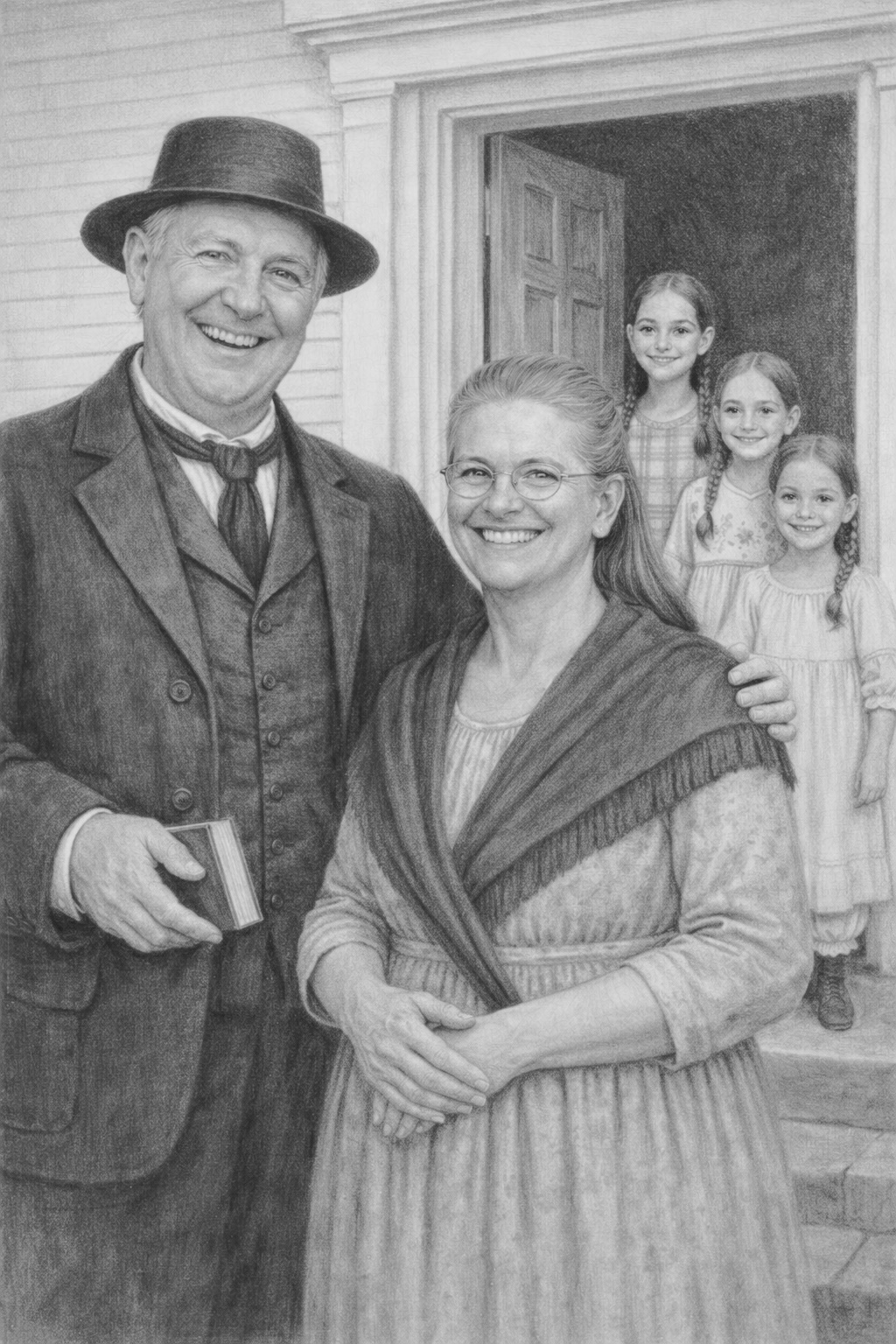
Aric Wilmunder and his wife, Lori Love, stand before the historic Pownalborough Court House in Dresden, Maine. Behind them are Beckie, Louisa, and Sallie Prescott, imagined as they may have appeared during the 1830s. The courthouse, the Prescott sisters, and the family’s surviving schoolgirl samplers inspired The Prescott Girls .
Biography
Aric Wilmunder is the author of The Prescott Girls: A Letter from Philadelphia , a middle-grade historical novel inspired by real nineteenth-century schoolgirl samplers and the lives of three sisters connected to the historic Pownalborough Court House in Dresden, Maine.
Before turning to historical writing, he spent decades in technology and interactive entertainment, including work at Lucasfilm Games, later LucasArts. His background in software engineering and interactive media continues to shape his research-driven approach to storytelling, historical interpretation, and visual reconstruction.
Wilmunder works with historians, museums, and textile experts. With Lori Love, an accomplished needleworker whose work has received multiple honors, he helped document and return historically significant samplers connected to the Betsy Ross family. Their research appeared in PieceWork magazine in the article Six Stitches Through Time .
Current Projects
- The Prescott Girls : Middle-grade historical fiction inspired by nineteenth-century schoolgirl samplers.
- Museum Coloring Book & Activity Guide (in development) : A companion activity book for young visitors to the Pownalborough Court House Museum.
- Historic Reimaginings : Research into responsible AI-assisted historical interpretation grounded in documented people, places, and artifacts.
- Teacher Resources : Free classroom materials for grades 4–7 connecting literature with history, geography, artifact analysis, and critical thinking.
Historical Research
Original research into nineteenth-century schoolgirl samplers led to the identification and return of historically significant Prescott family artifacts to Maine, collaborations with historians and museums, publication in PieceWork magazine, and ultimately the creation of The Prescott Girls.
Museum Collaborations & Presentations
| Project | Link |
|---|---|
|
The Discovery and Journey of the Prescott Schoolgirl Samplers
Presentation for the Lincoln County Historical Association on the discovery, research, and return of the Prescott family schoolgirl samplers. |
Watch |
|
New England Museum Association Annual Conference
A 90-minute workshop on Historic Reimaginings and the responsible use of AI in historically grounded museum interpretation. |
Conference |
Publications
| Project | Link |
|---|---|
|
The Prescott Girls: A Letter from Philadelphia
Middle-grade historical fiction inspired by real people, places, and artifacts. |
Book |
|
Six Stitches Through Time
PieceWork magazine article on the Prescott family samplers and their connections to Betsy Ross. |
Article |
|
Historical Research Papers
Original research and historical interpretation related to the Prescott family and their samplers. |
Browse |
Interactive Entertainment & Technology
Educational Resources
| Project | Link |
|---|---|
|
Teacher Resources
Free classroom study guides and activities for grades 4–7. |
Explore |
|
Museum Coloring Book & Activity Guide
A companion activity book designed for young visitors to the Pownalborough Court House Museum. |
In Development |
Other Interests
| Interest | Link |
|---|---|
| Bluegrass Fiddle Performance with 27 Strings | Watch |
| Cross-Country RC Glider Racing near Mount Shasta | Watch |
Author Gallery
Explore photographs connected to the author, the research, and the places behind the book.
View Author Gallery